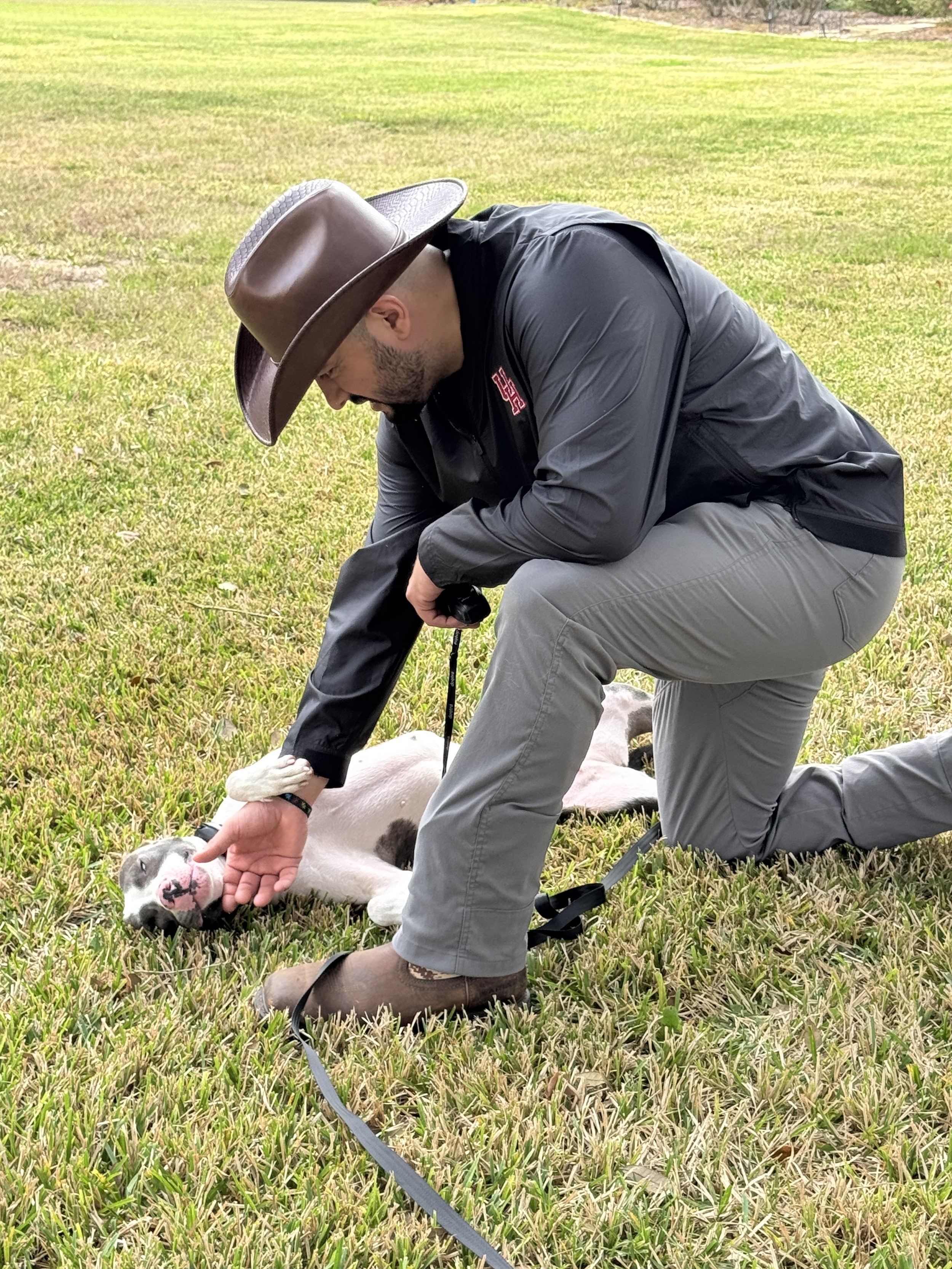
Therapy dog training

Our therapy dog training program equips you and your canine companion with the skills needed to bring comfort and support to those in need. Together, you'll be able to visit hospitals, schools, senior centers, and other facilities, offering emotional support, reduced stress, and a touch of furry friendship. This program is perfect for dog owners with well-socialized, friendly dogs who are passionate about giving back to the community.
What is a Therapy dog?
Therapy dogs provide emotional support and comfort in various settings. Distinct from service animals tasked with specific assistance for individuals with disabilities, therapy dogs accompany their handlers to environments like hospitals, schools, and senior care facilities.
Therapy dogs themselves don't have legal protections under the Americans with Disabilities Act (ADA) like service dogs. The ADA only covers service animals that are trained to do specific tasks to assist people with disabilities.
However, therapy dogs may be protected under facility policies. Many places that therapy dogs visit, like hospitals and nursing homes, have their own rules about allowing these animals in. These policies may address things like required vaccinations, temperament testing, and handler certification.

What can Therapy Dogs do?
Therapy dogs can act as natural stress relievers, offering physical affection, a sense of tranquility, and a welcome distraction during challenging times. They can help calm people who are crying, experiencing anxiety or panic attacks and their presence can demonstrably improve emotional well-being by reducing feelings of isolation and promoting relaxation.
Therapy Dog Training Series: Phase 1
This is a Group Training Class designed to prepare dogs and handlers for the Canine Good Citizen (CGC) Test while introducing the core skills, behaviors and expectations required for Therapy Dog work.
This Foundational course focuses on building calm, confident and reliable dogs in real world environments while strengthening handler communication and control. Handlers will also learn the fundamentals of therapy dog etiquette, safety and professionalism, including reading canine body language, advocating for their dog, and understanding what therapy organizations look for in future candidates.
This class is not a certification and does not include the CGC Test, but serves as an essential first step for teams interested in pursuing therapy dog work.
Book a Canine Good Citizen (CGC) Test.
The Canine Good Citizen (CGC) Evaluation is a standardized temperament and manners test developed by the American Kennel Club. This evaluation assesses a dog’s ability to behave politely and reliably in public settings while under control of their handler.
The CGC Test consists of 10 required exercises that evaluate real-world skills such as calm greetings, loose-leash walking, basic obedience, and the ability to remain relaxed and confident in everyday situations.
This is an evaluation, not a training session.
Dogs must already have the skills necessary to perform the test items (without training tools or equipment) at the time of evaluation.